Solidarity days: what are we talking about?
Overview
Businesses increasingly want to strengthen their societal impact by mobilizing their employees.
78% of them implement social commitment or philanthropy actions

Definition
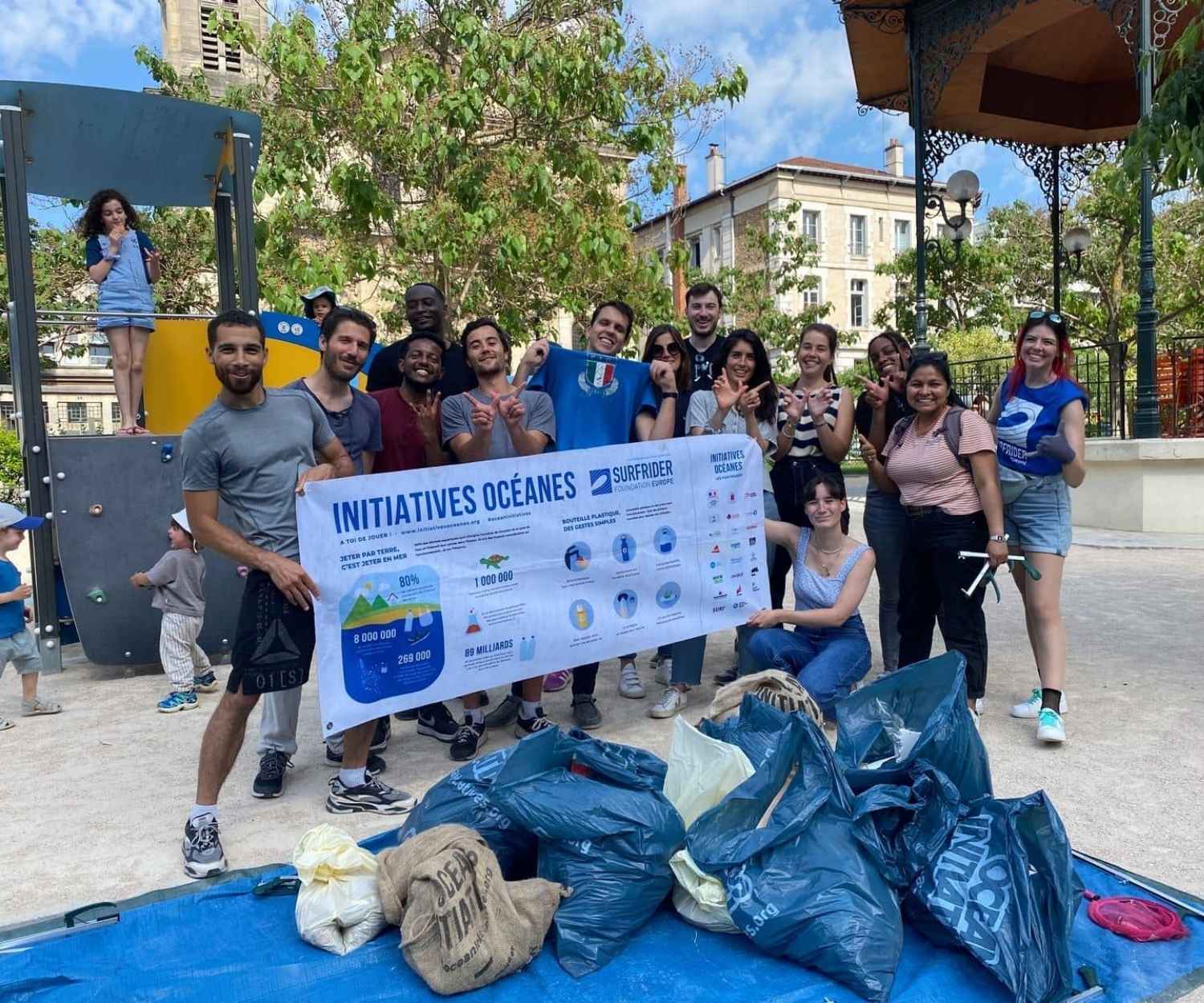
A solidarity day is an event organized by the company during which employees mobilize collectively to carry out societal actions.
These actions are multiple and take various forms:
- Field missions (waste collection, food distribution...);
- Actions of sensitization (screening of documentaries, conference on a subject of general interest...);
- Fundraising organized within the company;
- Conferences around engagement themes;
- Or even hosting a forum of associations within your company.
This type of event has the specificity of mobilizing all members of the company: management, HR, operational teams... the whole organization acts, sometimes even on several sites or simultaneously in several countries!
A solidarity day can be one-off or part of a larger system, such as a week or a month of solidarity.
Why organize solidarity days?
Solidarity days are not limited to simple one-off events: they have numerous benefits both internally and externally.
For the company
Organizing solidarity days makes it possible to make your CSR commitments. These initiatives promote the employer brand, illustrate the values carried by the company and reinforce the cohesion between the various divisions of the company: close-knit teams are 17% more productive, according to a Boson Project study carried out in 2024!
Solidarity days also contribute to making solidarity a pillar of corporate culture.
For employees
For employees, participating in a solidarity day creates pride and reinforces the feeling of belonging. It is an opportunity to get out of the daily routine, to discover another way of collaborating and find meaning in their work.
90% of Generation Z members (born after 1996) and 87% of Millennials (born between 1980 and 1995) in France consider the meaning of work to be essential for their professional development
deloitte, 2025
Organizing a solidarity day also allows you to unite your teams around shared values.
For society
These actions also have a positive impact on society. They provide associations with human resources and essential skills to enable them to continue their mission. By engaging in this way, the company and its employees contribute directly to the general interest!
Solidarity day and solidarity teambuilding: what is the difference?
Team buildings make it possible to create links and promote team cohesion. Rather than doing it in a private organization, the solidarity teambuilding is done with an association to gather around an activity with a social or environmental impact.

Unlike solidarity teambuilding, which only concerns a small group of employees, a solidarity day involves the whole company in the process, sometimes even involving external stakeholders (associations, communities, partners, etc.). Solidarity teambuildings focus on one action when solidarity days bring together several of them at the same time.
It is part of a logic of cultural transformation : make social commitment a collective act and rooted in the life of the company!
Several ways to design a successful solidarity day
A solidarity day cannot be improvised: for it to have a real impact and mobilize employees, it must be carefully thought out beforehand. Several key factors determine its success:
- Remain consistent with the values and strategy of the company: the actions taken must reflect the DNA of the organization and be part of its commitments CSR. For example, a company in the agri-food sector could support food banks;
- Co-building the solidarity day with its stakeholders: involving employees in the choice of actions and working with partner associations guarantees activities that are both useful and motivating;
- Communicate before, during and after the solidarity day: creating desire, adherence and pride through teasers or even testimonies... makes it possible to arouse curiosity and widely mobilize your employees;
- Anticipate logistical needs: registration, schedule management, available equipment... good organization is essential to ensure the smooth running of the solidarity day;
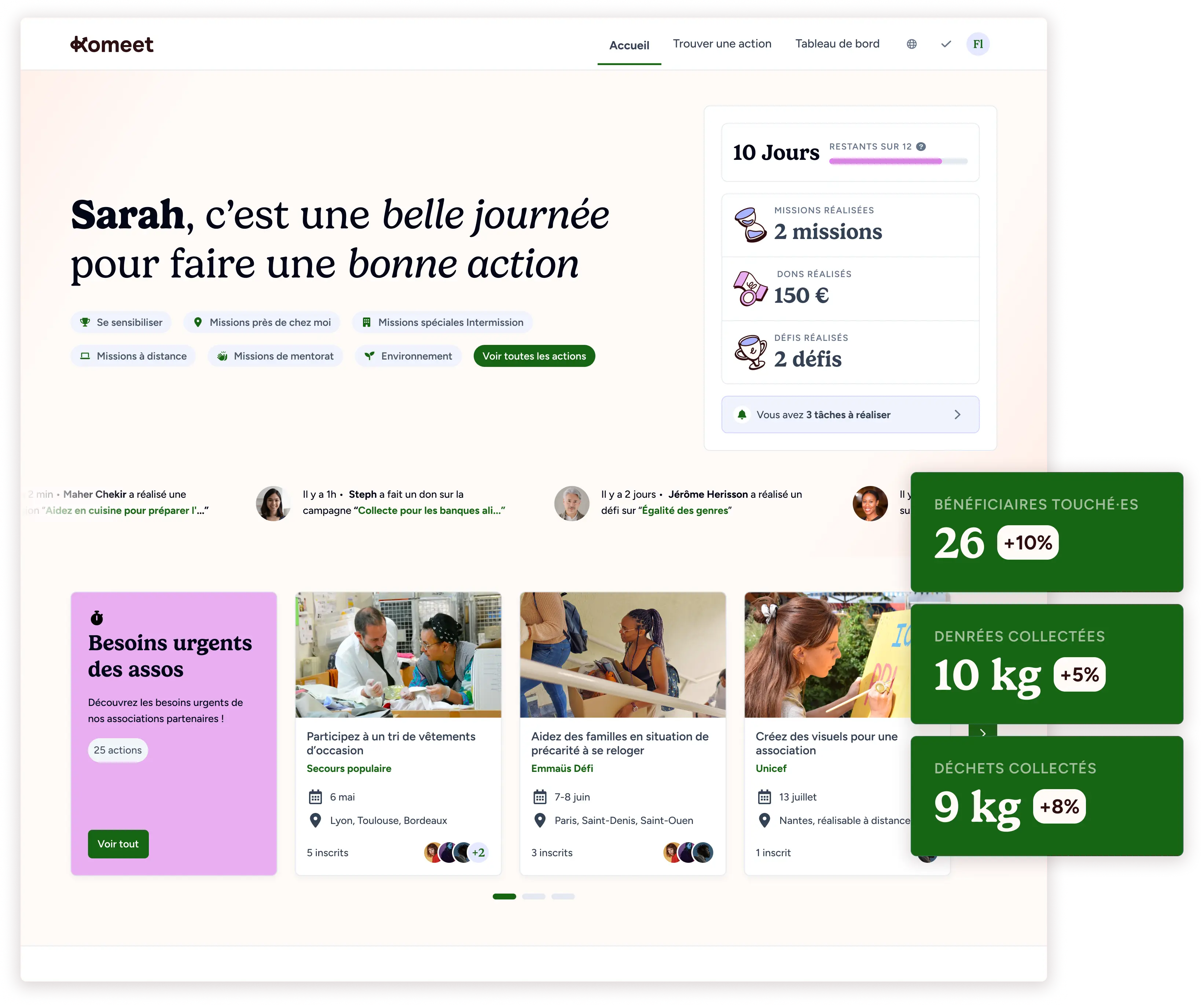
- Monitoring and valuing the impact: measuring the number of beneficiaries, collecting feedback from participants or even sharing the results internally make it possible to give meaning to the approach and to maintain its effects on employees.
A fictional example of a solidarity day around the fight against precariousness
To illustrate this concept, we can imagine a solidarity day organized around fight against precariousness.
A company organizes a solidarity day mobilizing its employees to support two associations committed to fighting precariousness: the objective is both to raise awareness among employees and to provide concrete support to beneficiaries.
The day starts with an awareness-raising workshop led by one of the associations, which supports homeless people. Employees discover the realities on the ground, discuss life paths and think about solutions to improve the daily lives of vulnerable groups.
The teams then split up to carry out several actions: some participate in the preparation and distribution of hot meals with the association that supports homeless people, while others organize a collection of clothing and school supplies, for the beneficiaries of an association that helps precarious families.
The day ends with a time for feedback, where each participant discusses the encounters, the challenges observed and the lessons they can apply in their personal and professional life!
Towards a global engagement strategy with Komeet Impulse
Organizing a Solidarity Day is a first step in engaging your employees. But for the impact to be sustainable, it is essential to include it in a global strategy for engaging employees.
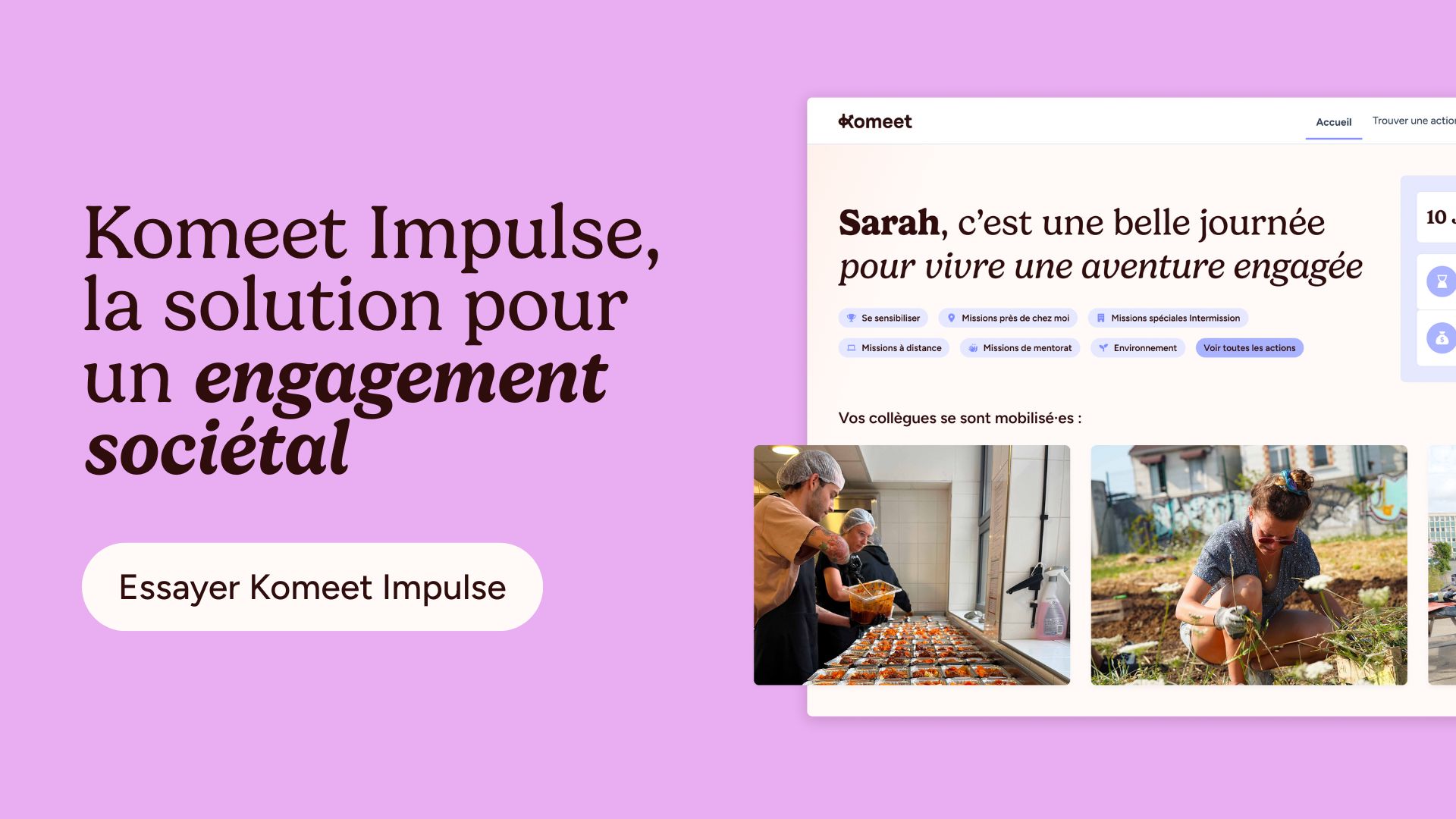
Komeet Impulse is your key partner in making employee engagement a driver of impact, by combining strategy, creativity and field deployment.
We support you in creating a successful solidarity day in several ways:
- By framing your event (the objectives, the location or the duration) 3 months in advance of the chosen date;
- By identifying partner associations for the event;
- By organizing missions and team-building with associations and by putting you in contact;
- And finally, by helping you organize the event, before and during, with regular appointments.
Do you want to organize a day, a week or even a month of solidarity?

.jpg)

%20(1).jpg)
