
What you need to know about the energy efficiency plan
In a context of energy transition and the fight against climate change, it is essential for companies to make a sustainable commitment in order to limit their environmental impact and to better manage their energy resources.
The energy sobriety plan set by the government in 2022 has clear objectives: a gradual reduction in energy consumption in the short and medium term, and greater decreases in the long term.
It aims to make it possible to secure supplies and avoid a possible rationalization of energy during the winter, a season of high consumption.
In the event of a supply outage, businesses will be the first to be affected. They are therefore strongly concerned by the government's plan!
The role of businesses in the energy efficiency plan
Several incentives for businesses have been requested by the State. To date, most of these measures are therefore not mandatory. Here are the 15 recommendations for businesses to follow:
- Lower the heat in the offices to reach a maximum of 19 degrees during the day (a measure that has been mandatory since 2025)
- Implement technical solutions that consume less energy (replacement of equipment and equipment, low-consumption lighting)
- Use lighting within the limits of what is strictly necessary (Switch off as soon as not occupied) with The obligation to extinguish at night)
- Diagnosing the energy performance of buildings and improve their insulation if necessary
- Use management tools, monitoring and measuring energy consumption in real time
- Group trips and remove unnecessary ones (especially limit air travel)
- Deploy the sustainable mobility package as well as the mobility credit system for employees using company vehicles
- Create or optimize mobility plans with social partners (to favour low-emission electric vehicles in corporate fleets)
- Present at the CSE and to union representatives a trajectory to reduce energy consumption of the company, as well as the action plan implemented as a result
- Integrate energy-saving devices in the context of contracting with suppliers, subcontractors and other stakeholders
- Appoint an energy sustainability ambassador or referent within the company
- Raise awareness and train employees in eco-gestures, in particular on digital uses
- Alert employees to alerts related to periods of tension on the network (EcoWatt device)
- Install autonomous heating devices and/or heat recovery
- And finally, plan a teleworking organization in case of emergency (i.e. high voltage on the electrical network)
The benefits of energy efficiency for businesses
Engaging in a low-energy approach is not only an effort imposed by the current situation, it is also a real opportunity for organizations. The benefits are numerous and affect economic, social and environmental aspects at the same time.
1. Reduced operating costs
Controlling consumption makes it possible to limit electricity, gas or fuel bills. In a context where energy prices are particularly volatile, each kWh saved means a direct and lasting saving for the company!
2. Anticipation of future regulations
The energy transition is inevitably accompanied by a gradual tightening of standards. Getting ahead of the curve today means avoiding stronger constraints tomorrow and staying in compliance without haste!
3. Contribution to climate goals
Finally, every business, regardless of size, has a role to play in reducing greenhouse gas emissions. Efforts undertaken in the context of energy sobriety contribute directly to the achievement of national and European objectives of carbon neutrality by 2050.
Displaying concrete actions to reduce energy consumption also contributes to strengthening the credibility of its CSR policy!

Why is it essential to make employees aware of energy sobriety?
To meet the challenge, employees have a central role since they are the first to be affected. Businesses should mobilise all their employees around the subject. Otherwise, the risks are numerous: lack of knowledge of the issues and risks, partial application of instructions, opposition to certain decisions...
Involving them in a positive story with pedagogy means ensuring that the situation is not experienced as a constraint!
Beyond the crisis, businesses must commit to reducing their energy consumption over the long term. Employees are also citizens: the behaviors and habits that they will reproduce at home will make it possible to fight climate change in the long term.
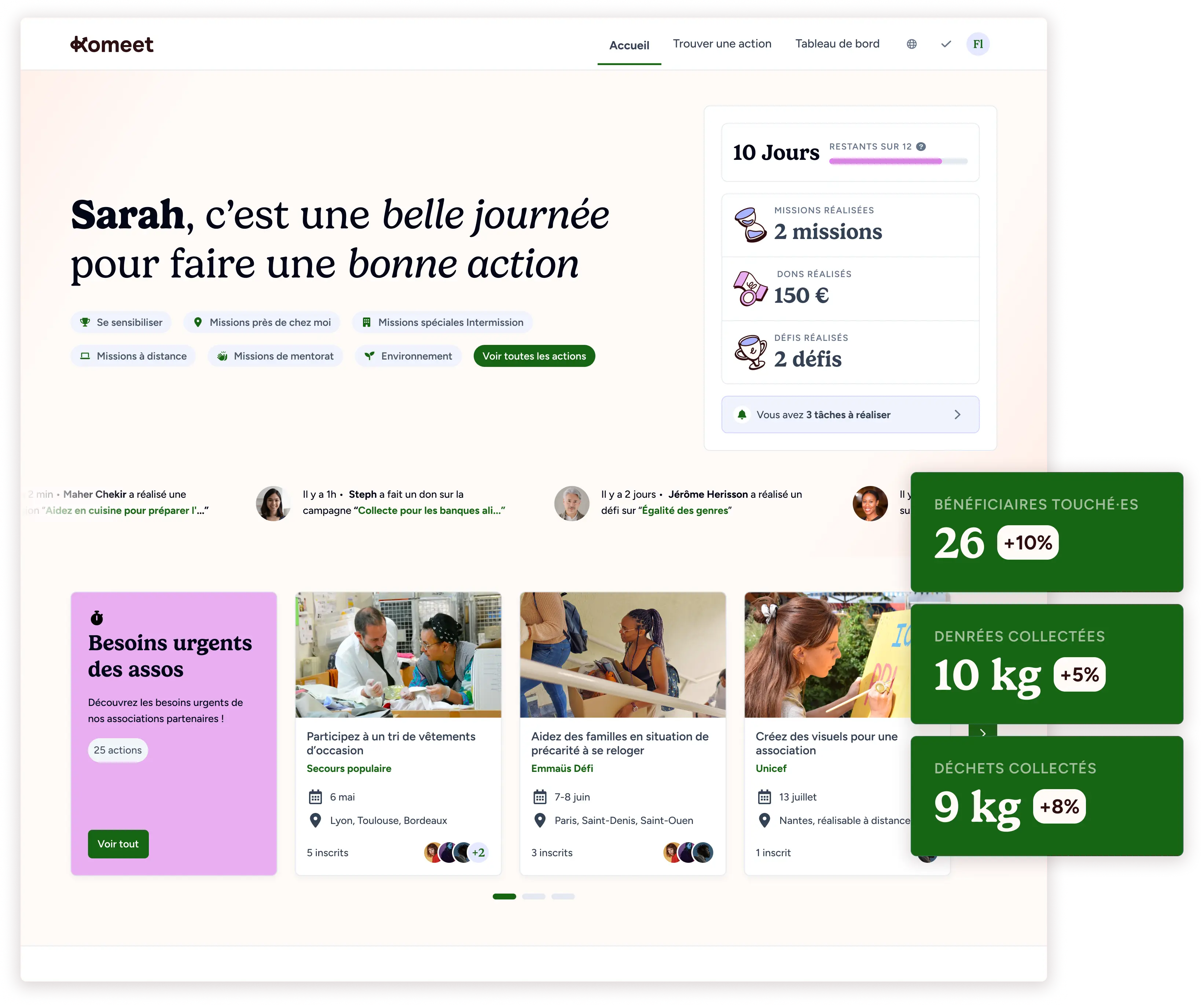
Going further with Komeet
Do you want to engage your employees but you don't know where to start?
Komeet accompanies you in the construction, deployment and management of your engagement program.
Today, Komeet is proud to count:
- 430 corporate clients
- 3,500 associations supported
- 2.1 million hours of commitment (that's 1,000 years of impact!)
- +200,000 committed employees and +2 million € in donations
- And an international presence!

.jpg)

%20(1).jpg)
